

As Africa Month concludes, we join millions across the continent and the African diaspora in reflecting on our shared history, shared humanity, and collective future. South Africa’s prosperity is deeply tied to the prosperity of our continent. At a time marked by growing inequality, conflict, and social fragmentation, Africa’s future will depend on institutions that generate knowledge, foster innovation, and strengthen social cohesion.
Africa Day, observed annually on 25 May, commemorates the founding of the Organisation of African Unity (OAU) in 1963, symbolizing African unity and solidarity. It celebrates the continent’s rich heritage, resilience, and progress toward collective development. These are the principles and ideals that consistently thread through all the work of the HSRC – not time-bound by a commemorative day or month, but always present.
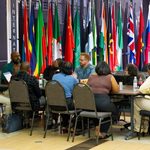
HSRC Press was invited and exhibited at the Africa Day 2026 celebration held on 25 May 2026 at the Nelson Mandela School of Public Governance, University of Cape Town. The event provided a valuable opportunity to showcase the latest African scholarship published by HSRC Press. The celebration included a keynote address, poetry, spoken word performances, and live music, creating a vibrant and culturally rich atmosphere that aligned well with our mission to promote African research and knowledge.


On 20 May, HSRC Press launched To Defend the Earth Is to Defend the Human: Amílcar Cabral on Soil, Society and Freedom. The response from the audience told us everything about why this book matters right now.
A room full of scholars, students, farmers, and curious members of the public gathered at Exclusive Books Cavendish Square not for a celebrity author, not for a trending topic, but for a collection of writings by a man who died in 1973 and the conversation was insightful.
Cabral (1924–1973) was one of Africa’s most remarkable thinkers a poet, an agronomist, and the independence leader who led the liberation of Guinea-Bissau and Cape Verde from Portuguese colonial rule. What made him unusual among revolutionary intellectuals of his era was this: he rooted his politics in the earth itself. Not as metaphor, but literally in soil composition, in farming conditions, in the ecological character of the land his people worked and were dispossessed of.
He understood, decades before the language of “climate justice” existed, that colonial violence and ecological collapse are not separate crises. They are the same crisis.
Edited by Anselmo Matusse, Carlos Lopes, and Lesley Green and translated into English by Matusse this volume gathers Cabral’s writings on soil, society, and liberation into a single, accessible collection.

In an era of accelerating climate emergency, land dispossession across the Global South, and the ongoing ecological costs of extractive economic models, Cabral’s insight lands with what the editors call “an almost uncanny force.” The health of a society cannot be separated from the health of its soil. That idea, developed by a liberation leader doing soil surveys in West Africa in the 1950s, feels less like history and more like a missing chapter in our current debates.
The diversity of the audience at Cavendish Square was itself a kind of argument. Environmental justice advocates sat alongside literary scholars. Farmers talked with editors. Students of African intellectual history found common ground with practitioners working on food sovereignty today.
The event was co-presented with the support of the HSRC and the University of Cape Town. The conversation that followed was present in how people who need to effect change have to experience it, live it, and then only can their thinking be transformed to what people require.