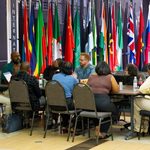


The HSRC’s Strategic Partnerships and Internationalisation Unit (SPIU) hosted a multisectoral dialogue on science diplomacy, and launched the HSRC Science Diplomacy School on the 26th of August 2025, at the Department of International Relations and Cooperation (DIRCO). The dialogue titled Engaging futures: Bridging research, policy & diplomacy aimed at igniting conversations on science diplomacy and highlighting the value of strategic collaboration in addressing pressing continental and global challenges. The dialogue was convened in partnership with government departments DIRCO and the Department of Science, Technology and Innovation (DSTI), as well as local and regional think tanks including the Science Diplomacy Capital of Africa (SDCfA), the Council for Scientific and Industrial Research (CSIR), the Academy of Science of South Africa (ASSAf), the South African Young Academy of Science (SAYAS), and the African Academy of Sciences (AAS).


The dialogue brought together diplomats, government officials, academics, and scientists to explore innovative ways to enhance the visibility and influence of African science, technology and innovation (STI) in global policy forums. Discussions centered on bridging research, policy, and diplomacy to tackle the most pressing challenges facing the global majority. Keynote speakers and panelists acknowledged the increasing need for strengthening knowledge systems, translating knowledge into policy, and making deliberate efforts to position Africa as a central actor in driving sustainable development.
A recurring theme was the importance of amplifying African knowledge systems and Africa-led narratives to actively shape policy discourses and ensure that African priorities, and innovations influence global policy frameworks and governance processes. Speakers stressed the need for Africa to invest in knowledge mobilisation processes and establish sustainable funding systems that reduce dependence on external donors. . As Lesetja Reatlegile Mogoba, of the BRICS Business Council noted, “There is a concerning disconnect between value creation and money creation, and we need to rethink how indigenous knowledge and innovation are recognised in economic terms”.
Speakers also identified is capacity building for science diplomats and scientists. Deputy Director-General of DSTI Daan Du Toit emphasised “the need for diplomats to be trained in science and science interpretation and use, and a need to train scientists in diplomacy”. Responding to this need, the HSRC announced the establishment of the Science Diplomacy Summer School, a 10-day programme to be held in Johannesburg in October 2025. This initiative will build capacity, foster networks and enhance awareness of the value of scientific collaboration in advancing Africa’s development agenda.
Watch the event below: