

The Human Sciences Research Council (HSRC) Annual Conference 2026 convened in Johannesburg this week, under the overarching theme “The Age of Digitality and the Future of Society: Rethinking Knowledge, Ethics, and the Role of the Humanities and Social Sciences”. Rather than focusing narrowly on technical innovation, the conference used the lens of “digitality” to examine how society changes as digital systems become embedded in how people live, work, learn, communicate, produce knowledge, and govern.
Framing digitality
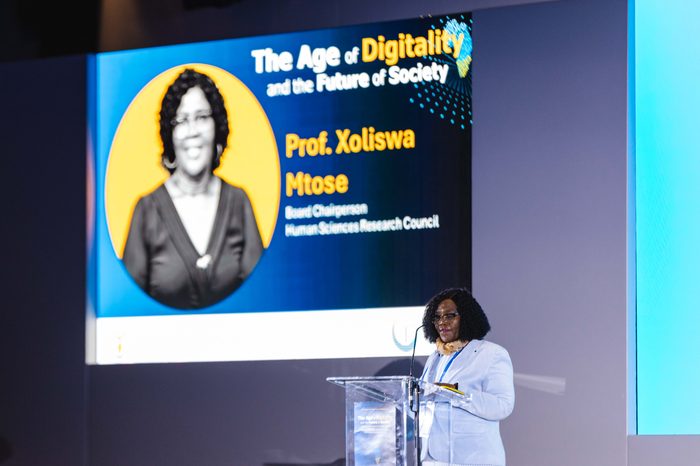
HSRC Board Chairperson Prof. Xoliswa Mtose opened the conference with opening remarks, highlighting that digitality is not merely a technical phenomenon, but a way of living that shapes governance, equity, culture, and social cohesion.
Following these poignant opening remarks, HSRC CEO Prof. Sarah Mosoetsa delivered the conference objectives and reflections, in which she emphasized that technology does not enter an empty society; it encounters existing histories, institutions, and distributions of power and opportunity. Because South Africa’s digital transformation encounters profound societal inequalities, Prof. Mosoetsa argued that the humanities and social sciences cannot arrive at the end of technological development merely to explain social consequences—they must be present when questions are formulated and choices are made.
Ethics, systems redesign, and the indigenous knowledge
Throughout the keynote addresses and panel discussions, several key ethical and systemic themes emerged:
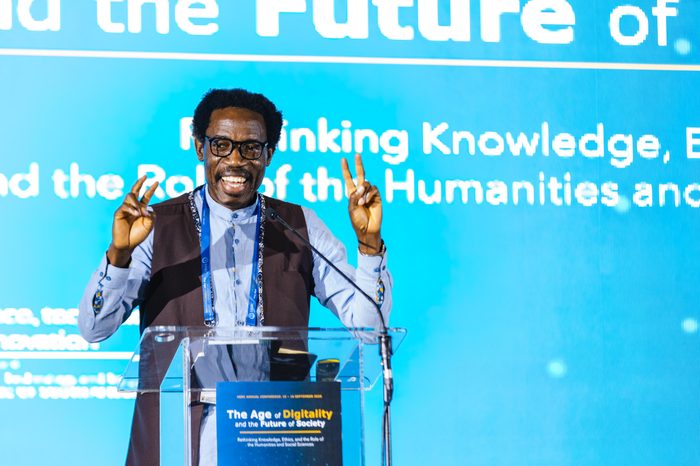
- Ethics for software engineers: Prof. Ayobami Ojebode argued that while digital tools support the humanities, the humanities must actively shape AI by embedding logic, critical thinking, axiology, and ethics into software engineering education.
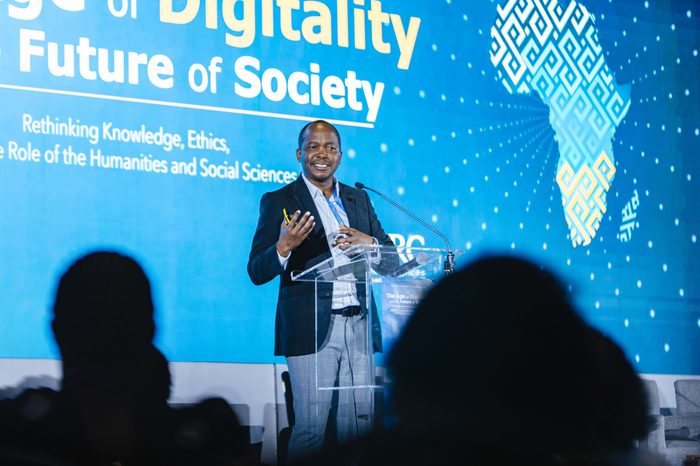
- The digital Faustian bargain: Associate Professor Mamello Thinyane highlighted the “Faustian bargain” where individuals repeatedly surrender privacy, values, and critical thinking for short-term digital conveniences—ranging from automated recommendation algorithms to over-reliance on conversational AI tools. He challenged delegates to move beyond superficial fixes to redesign systems that prioritize collective resilience and human wellbeing.
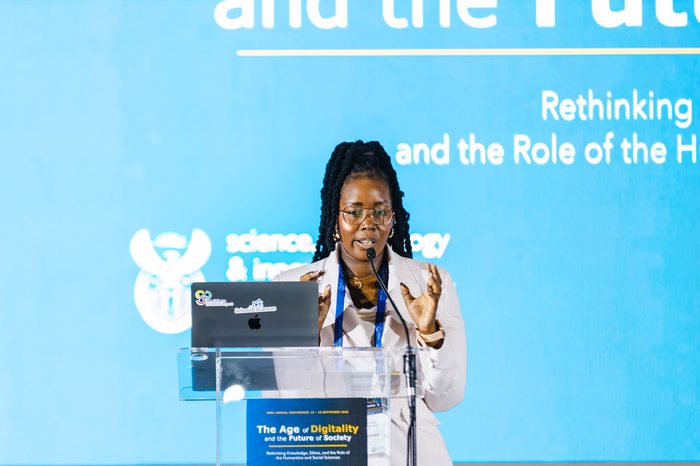
- Indigenous knowledge imperative: across the board, the discussions stressed the imperative for African-led governance over indigenous knowledge ecosystems within digital humanities and AI. Dr. Tsosheletso Chidi particularly examined digital inequality, emphasizing the integration of African languages into AI technologies to ensure cultural and linguistic justice.
Political economy and policy connection
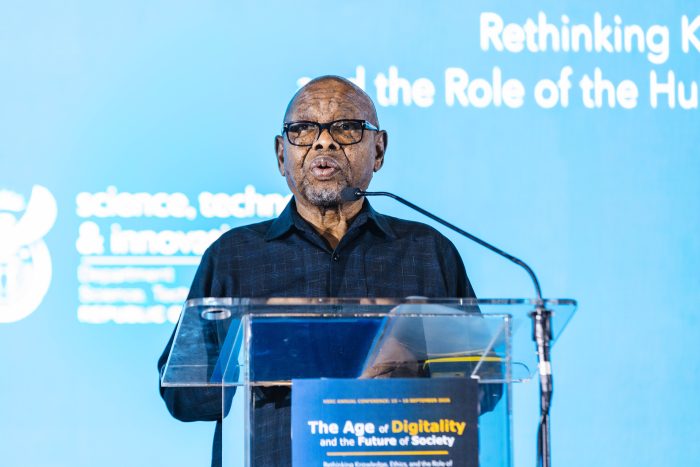
In his rousing closing address, Minister of Science, Technology and Innovation Prof. Blade Nzimande criticized mainstream tech narratives that treat digital evolution as neutral or detached from power structures. He called for an ethical AI framework that directly confronts social inequality, neo-colonialism, and imperialist conflict, driven by civil society, labor, and social movements.
Finally, there was consensus among speakers and panellists that academic research cannot remain confined within institutional walls; research findings must directly inform policy conversations, government planning, and public governance across South Africa and the Global South. View the Minister’s speech here.