


Tobacco use contributes to public health concerns in South Africa. This is especially true given the country’s high HIV and tuberculosis burden, as tobacco can worsen health outcomes for those living with HIV. The country’s temporary tobacco sales ban during the pandemic created a rare opportunity to examine whether restricting access to tobacco could change tobacco-use behaviour.
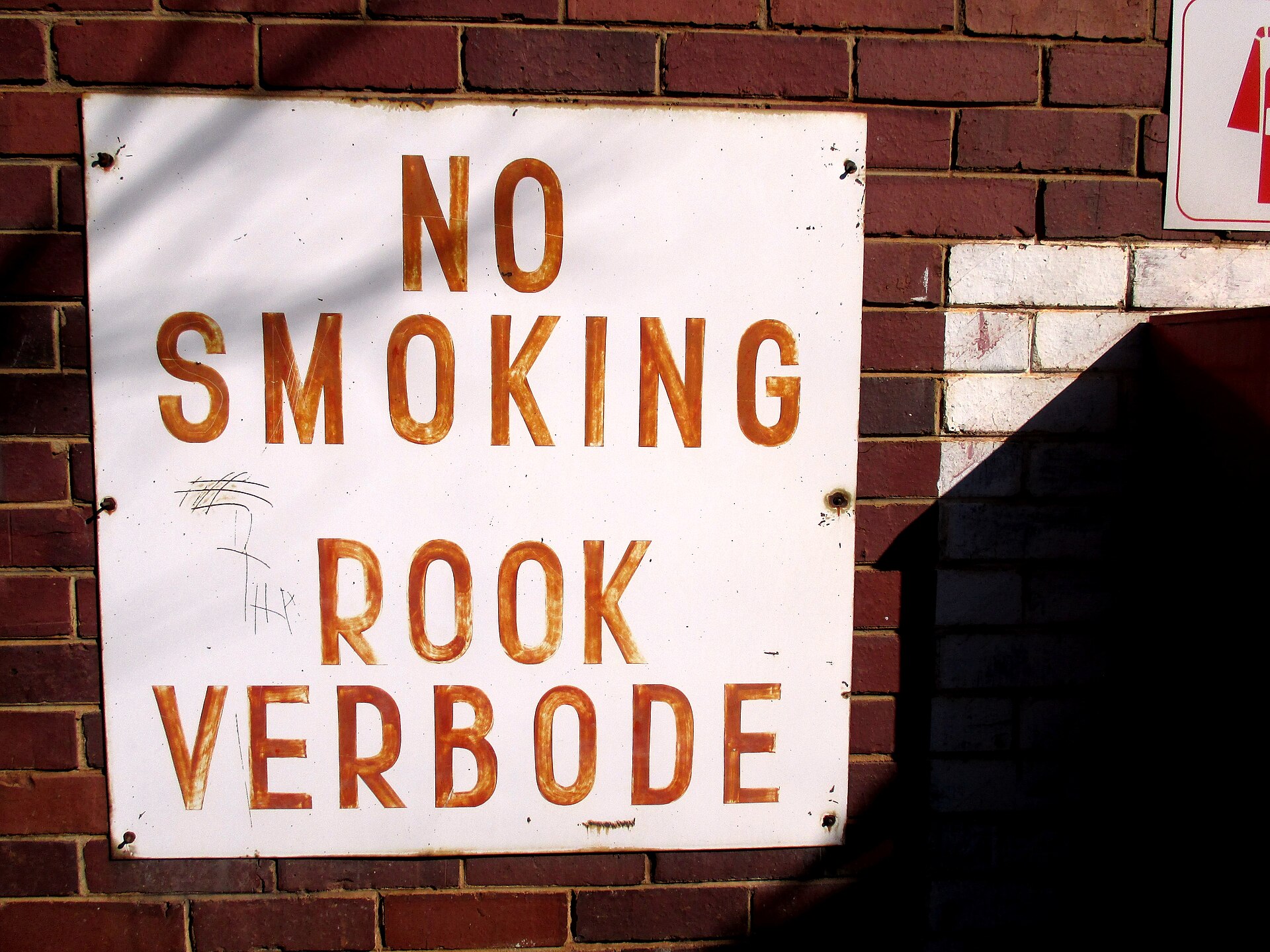
Photo: Katangais, Wikimedia Commons
On 27 March 2020, the South African Government implemented a temporary COVID-19 tobacco sales ban prohibiting the sale of tobacco products, e-cigarettes and related products. The government justified the ban on public-health grounds, citing concern that smoking could increase vulnerability to severe COVID-19 and place additional pressure on the health system. The restriction was lifted and sales resumed from 18 August 2020.
Although the sale of tobacco products was prohibited, illicit cigarettes remained widely available, with survey evidence showing that most smokers who continued smoking were still able to buy cigarettes despite the ban.
Tobacco use remains a major public health concern in South Africa. The latest available data for the country report that 29.4% of adults aged 15 years and older in South Africa used tobacco in 2021, corresponding to approximately 12.7 million people. Of these, 41.7% of men and 17.9% of women used tobacco.
Smoking and other forms of tobacco use are linked to cancers, heart and lung disease, and other serious illnesses. For people living with HIV, tobacco may be associated with poorer health outcomes and a greater risk of complications, including tuberculosis and other conditions that can worsen already fragile health.
What can the ban teach us?
South Africa’s temporary ban on the sale of tobacco and vaping products during the 2020 COVID-19 pandemic created an unusual moment to examine whether policies that try to change behaviour by controlling the availability or sale of a product (supply-side policies) could interrupt tobacco use, particularly in vulnerable populations.
A study co-authored by HSRC researcher Dr Ronel Sewpaul explored how tobacco use changed before, during and after the 2020 tobacco sales ban among people living in rural KwaZulu-Natal, in an area with high HIV prevalence. The study was conducted by researchers from several research organisations and set out to understand whether the sales ban reduced tobacco use, whether people switched to other tobacco products, and which factors were linked to quitting or relapsing once the ban ended.
The sample population
The study drew on participants from the Vukuzazi programme in rural KwaZulu-Natal. Vukuzazi is a large population-based health study established to improve understanding of infectious and non-communicable diseases in the region. Between 2018 and 2020, residents in the region aged 15 years and older were invited for health screening for HIV, tuberculosis, hypertension and diabetes. As part of that baseline screening, information was also collected on current and lifetime tobacco use.
Between May 2021 and November 2022, researchers conducted telephonic interviews with a subset of the original Vukuzazi sample, comprising all individuals who were smokers or former smokers at the time of the 2018–2020 baseline study, and a random sample of those aged 15–29 years who had never smoked, with an even division by HIV status.
How many people quit smoking during and after the ban?
Of 1,448 eligible participants, 752 completed the telephonic survey. This analysis focused on 449 people who reported using tobacco just before the ban. Among them, 26.3% said they stopped using tobacco during the ban. However, this reduction was mostly temporary: 87.3% of those who stopped during the ban reported using tobacco again after the ban. Overall, tobacco use after the ban was 8.7% lower than before the ban. Notably, only 3.3% stopped during the ban and remained tobacco-free afterwards, while a slightly larger share, 5.3%, quit only after the ban had ended.
These findings suggest that the ban did interrupt tobacco use for some people, but that most of this effect was not sustained over time. The researchers argued that a temporary supply restriction on its own was not enough to support long-term cessation, especially in a context where illicit tobacco remained accessible and formal quitting support was limited.
Predictors of tobacco use before and after the ban
The study also investigated which factors predicted the use of tobacco during and after the ban. Factors studied included age, sex, intensity of combustible tobacco use, HIV status, any history of trying to quit before the ban, alcohol use, non-communicable diseases such as hypertension or diabetes, socioeconomic status and employment status.
HIV status
The study found that, after adjustment for other factors, people living with HIV were more likely than those not living with HIV to stop using tobacco during the ban. The authors suggest that this may reflect heightened health concerns during the pandemic, especially given the perceived risks of COVID-19 for people with existing health vulnerabilities (comorbidities).
Intensity of tobacco use
Heavier tobacco use before the ban made quitting less likely. For each increase in daily combustible tobacco use, the odds of stopping during the ban fell. Researchers argued that this pointed to the role of nicotine dependence, as people who smoked more heavily may have found it much harder to quit, even when legal access to products was restricted. The discussion notes that this strengthens the case for accessible cessation support, including pharmacological treatment, especially for heavier users.
Previous attempts to quit
A history of trying to quit before the ban also mattered. Among those who had stopped during the ban, people who had previously attempted to quit were less likely to relapse afterwards. Prior attempts to quit were also linked to lower tobacco use after the ban more generally. This suggests that the ban may have had a greater effect on people who were already somewhat motivated to stop, with less impact on those with no prior intention to quit.
Other factors
Other factors, such as age, sex, socioeconomic status, alcohol use, employment status and non-communicable diseases, were examined, but most were not statistically significant predictors in the final adjusted models for quitting during the ban. Still, the paper notes that people with non-communicable diseases appeared somewhat more likely to stop during the ban, even if this did not reach statistical significance. In addition, older people were more likely to continue to use tobacco after the ban ended.
Changes in use of specific tobacco products
The study also looked at whether people switched between products during the ban. Among those who used combustible tobacco (tobacco that is burned and smoked, such as cigarettes) before the ban, 73.2% continued using it during the ban, and only 0.5% switched to smokeless tobacco. Among those who used smokeless tobacco (tobacco that is not burned and often placed in the nose or mouth, such as chewing tobacco) before the ban, 71.8% continued using it during the ban and 28.2% stopped all tobacco use. None switched to other product types during that period.
After the ban, most users stayed with the same kind of product they had been using during the ban. Among those using combustible tobacco during the ban, 91.2% were still using combustible products afterwards. Among those using smokeless tobacco during the ban, 93.8% continued using smokeless tobacco afterwards. Of those who had stopped using tobacco during the ban, 78.0% used combustible tobacco after the ban, 8.5% used smokeless tobacco, and only 12.7% remained tobacco-free.
This pattern is important, because it shows that the overall drop in tobacco use was not mainly driven by people replacing cigarettes with other products. Instead, switching between product types was minimal. The researchers suggest this may reflect strong product preferences, limited access to alternatives, or affordability constraints.
What does this mean for policy?
The study provides rare evidence from a rural, predominantly black South African population with high HIV prevalence, a group often underrepresented in earlier research on the tobacco sales ban. It shows that the 2020 ban was associated with a temporary reduction in tobacco use, but that most people who quit during the ban relapsed afterwards.
“High relapse rates and continued use particularly among people with higher nicotine dependence or no prior quit intentions reveal the limitations of South Africa’s supply-only tobacco sales ban policy,” researchers wrote. “These findings support the need for demand-focused policies that expand access to behavioural and pharmacological tobacco treatments, to achieve more sustained reductions in tobacco use.”
Research contacts and acknowledgements
This Review article was written by HSRC science writer Jessie-Lee Smith with inputs from Dr Ronel Sewpaul. It was based on the paper Changes in tobacco use in rural South Africa during the 2020 tobacco sales ban: an analysis of current and previous behaviours using cross-sectional data
For more information about this work, please contact Dr Ronel Sewpaul at rsewpaul@hsrc.ac.za.
The survey and research team included Acadia Thielking and Yiqi Qian from the Medical Practice Evaluation Center at Massachusetts General Hospital; Ronel Sewpaul from the HSRC’s Public Health, Societies and Belonging Division; Stephen Olivier, Hloniphile Ngubane, Thando Zulu and Prof. Emily Wong from the Africa Health Research Institute; Dr Douglas E. Levy and Prof. Nancy A. Rigotti from Massachusetts General Hospital and Harvard Medical School; Prof. Gina R. Kruse from the University of Colorado School of Medicine; Prof. Mark J. Siedner from the Africa Health Research Institute, Massachusetts General Hospital, Harvard Medical School and the University of KwaZulu-Natal; and Dr Krishna P. Reddy from Massachusetts General Hospital and Harvard Medical School.