
Effective science communication is key to enhancing public understanding and engagement in science, technology, engineering and mathematics (STEM), and the media plays a critical role. Using data from South Africa’s National Science Week between 2022 and 2024, this piece explores how traditional and social media were used to communicate science and promote the event.
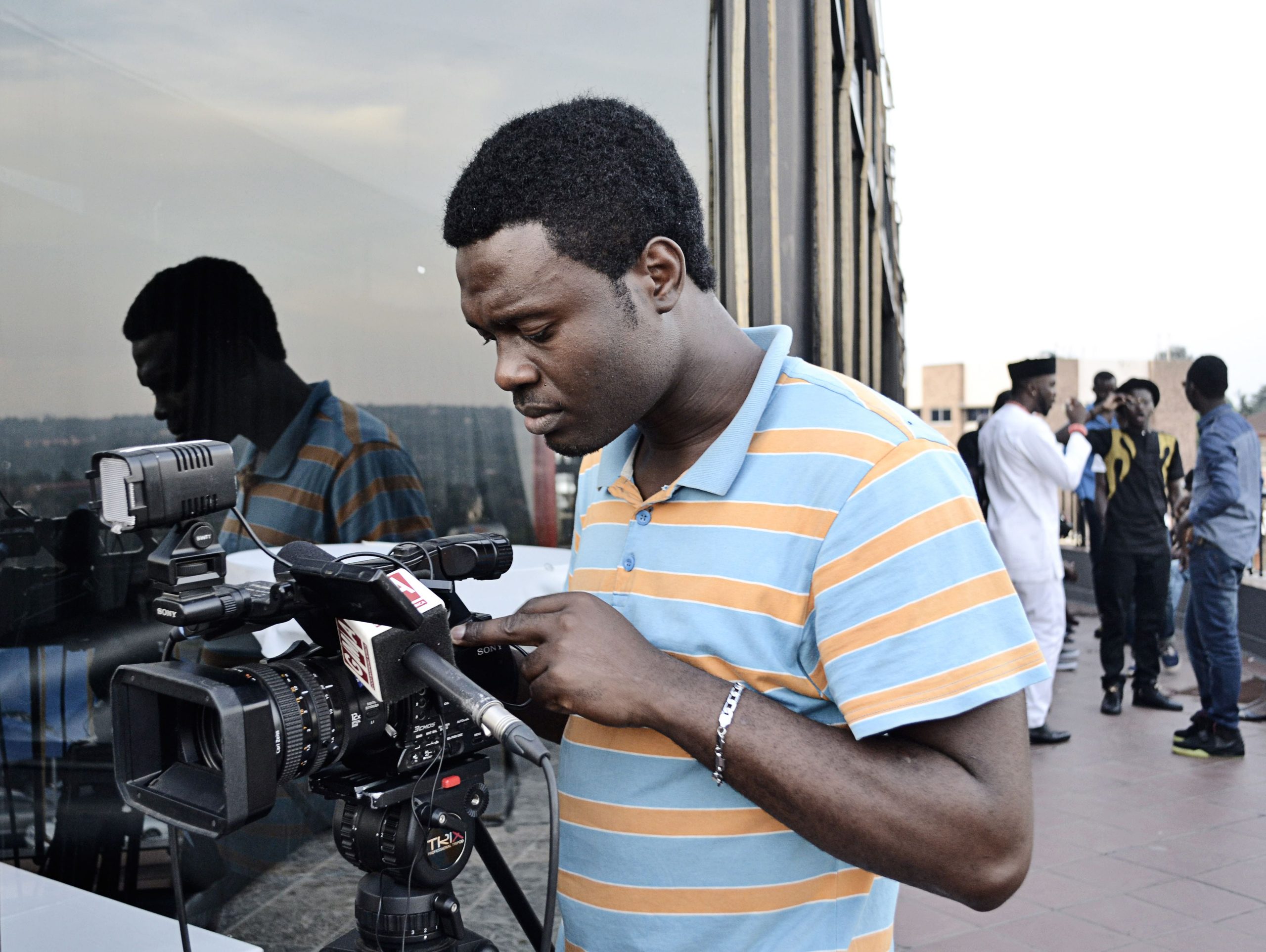
Photo: Thobile Nhlapo, Pexels
Science communication, broadly, is the use of relevant skills, media, activities and dialogue to build public awareness, interest and understanding of science. In South Africa, cultural and linguistic diversity, high levels of illiteracy and poverty, and unequal access to resources and information – particularly in remote rural communities – make effective science communication urgent and challenging. These constraints mean that a single communication strategy cannot effectively reach the whole population.
South Africa is emerging as one of the most technologically advanced countries in Africa and is striving to solidify its standing among the world’s leading nations in science and technology. Despite numerous challenges, there is a strong interest and belief that South Africa can make a significant contribution to scientific advancement and technological change, both in Africa and globally. Realising this vision requires a concerted effort to foster a scientifically literate and engaged society. The South African Department of Science, Technology and Innovation (DSTI) is committed to promoting participation in STEM and cultivating such a society.
The media plays a critical role in science communication by conveying scientific knowledge to local and global audiences, shaping public perspectives and empowering individuals to participate in discussions about issues that affect their lives. South Africa’s science media landscape is under strain, with shrinking budgets and staff cutbacks meaning fewer specialist science reporters and limited space for science stories in mainstream and community outlets. At the same time, there is growing pressure from policymakers, research funders, institutions and society for science media coverage to become more accessible by focusing on everyday concerns.
National Science Week: South Africa’s annual STEM celebration
South Africa’s annual National Science Week (NSW) has become one of the country’s most important science communication platforms since its inception in 2000. The DSTI-led initiative aims to engage and inspire people of all ages by showcasing STEM fields and career opportunities. Over the years, the event has undergone significant changes in its format and target audience. After COVID-19 forced its cancellation in 2020, the event was held in a virtual format in 2021, and a hybrid model was adopted from 2022, combining online sessions and in-person engagements across the nine provinces. Its most significant change came in 2026, when NSW was expanded into a month-long National Science Month.
The reform was grounded partly in the HSRC’s own research. Announcing the inaugural month on 29 June 2026, Science, Technology and Innovation Minister Blade Nzimande pointed to the department’s 2011 Ten-Year Review of National Science Week and to independent studies – among them the HSRC’s 2022 South African Public Relationship with Science Survey – as evidence that the programme needed greater scope and geographical reach. He also framed the shift as a response to fast-moving global technologies such as artificial intelligence, quantum computing, green energy and advanced biotechnology. National Science Month was launched on 4 July 2026 at the Vaal University of Technology’s Southern Gauteng Science and Technology Park in Sebokeng, under the theme “Science, Technology and Innovation Are for Everyone”. Running across all 31 days of July, it organised activities around 14 thematic areas – from human health and climate change to science journalism and the decolonisation of knowledge systems – and opened with an exhibition of 132 stands and more than 100 exhibitors drawn from universities and the department’s science entities.
NSW 2024: media coverage and organisational use
Media coverage of NSW 2024 followed a predictable arc, with online platforms dominating pre-event communication, followed by a surge across all channels during the event and then subsiding post-event. Radio and television coverage lagged behind online and print throughout but was lowest during the pre-event period, when building public anticipation matters most.
A survey of implementing organisations following the event revealed that the most-used communication platforms were organisational newsletters and email, followed by Facebook, posters and flyers, and radio. LinkedIn, a platform with significant reach among professionals and potential science champions, remained heavily underutilised. The reliance on newsletters and institutional channels suggests NSW activities are being promoted primarily to existing audiences, limiting the event’s capacity to reach and inspire new ones.
Traditional media: coverage trends
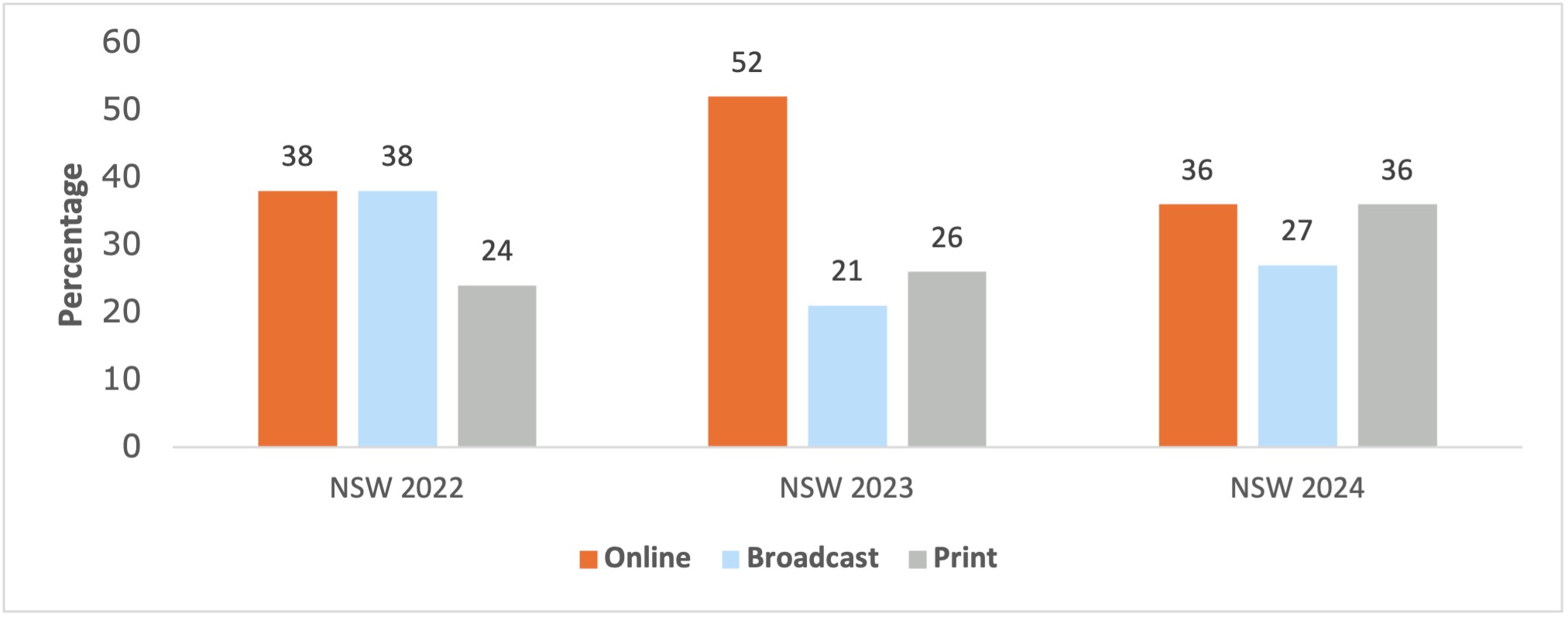
Traditional media encompasses mass communication through print (newspapers and magazines), broadcast (television and radio) and online platforms subject to editorial oversight. A review of the three NSW cycles between 2022 and 2024 recorded 98 traditional media data points, comprising six print, 39 broadcast (nine television and 30 radio), and 53 online data points, making online media the most frequently used traditional media channel. Its use rose from 38% in 2022 to 52% in 2023, before decreasing to 36% in 2024, possibly reflecting a reduction in participating organisations. A total of 41 organisations were recorded in 2022, 47 in 2023 and 31 in 2024.
Print media showed a steady upward trend, rising from about a quarter of coverage in 2022 and 2023 to just over a third in 2024.
Despite television and radio remaining the most trusted and widely accessed platforms for many South Africans – particularly those in lower-income groups and rural areas – broadcast media use fell by 17 percentage points from 2022 to 2023, with a modest 6 percentage point recovery in 2024. This raises significant equity and reach concerns, as reduced reliance on broadcast media effectively excludes those communities most in need of science communication.
Figure 1. Traditional media use in NSW science communication (2022–2024)
Source: HSRC
Social media: growth, reach and risk
A total of 608 social media data points related to NSW were observed across platforms between 2022 and 2024, spanning X (Twitter), YouTube, Instagram and Facebook. X had the highest NSW coverage in 2022, followed by a sharp decline in 2023 and a partial recovery in 2024. YouTube coverage remained minimal, likely due to prohibitive data demands – a significant barrier in a country where mobile data costs are disproportionately high relative to income. Facebook recorded the largest growth, consistent with its position as the most widely used social media platform in South Africa. Instagram coverage followed a similar upward trend.
Although social media has become more widely adopted as a science communication tool due to its increasing influence, there are concerns that the quality of information disseminated is lower than that of traditional media, with fake news and misinformation spreading most rapidly through high-engagement posts.
For an event designed to build public awareness and encourage engagement with science, operating in a misinformation-prone environment presents a strategic challenge, since public receptiveness depends heavily on trust. The displacement of traditional media by largely unregulated social media has weakened the gatekeeping function once performed by specialist science journalists and editors.
Improving event-related science communication
The following recommendations would enhance communication around science engagement events:
- Reinvest in broadcast media: Television and radio, particularly in local languages, remain the most equitable channels for reaching rural and low-income South Africans. Broadcast coverage must be actively rebuilt through dedicated media partnerships.
- Expand professional network engagement: LinkedIn’s reach among professionals, academics and policy influencers makes it a high-value, underused channel for increasing awareness among those who can champion science within their own institutions.
- Develop targeted social media content: Centrally coordinated, platform-specific content would enable consistent and accurate communication.
- Target new audiences: Promoting events through community radio, local newspapers, schools and community centres would help fulfil the mandate of making science accessible to all.
- Monitor and respond to misinformation: A social‑media monitoring and rapid‑response network should be established, assigning primary monitoring and fact‑checking responsibilities to organisations with the relevant technical expertise. For example, the HSRC would focus on social science, risk and communication matters, the Council for Scientific and Industrial Research on science and technology topics, and the Medical Research Council on medical issues. These organisations would maintain real‑time monitoring for misinformation in their domain and produce short, evidence‑based corrections and guidance.
This analysis of media trends is vital for assessing how events like NSW are promoted and for identifying strategies to extend their reach in future. As the public’s relationship with science continues to be shaped by the media, ensuring National Science Month will be visible, credible and accessible to all South Africans through appropriate channels is not simply an effective communication strategy; it is a science equity imperative.
Research contacts and acknowledgements
This article was written by Dr Thando Tenza and Sylvia Hannan, chief researchers in the HSRC’s Equitable Education and Economies (EEE) division. It is based on findings from the 2022, 2023 and 2024 National Science Week Monitoring and Evaluation study, funded by the Department of Science, Technology and Innovation (DSTI).
Over the past few years, the core research team members on the Monitoring and Evaluation of the National Science Week were Dr Vijay Reddy, Sylvia Hannan, Dr Thando Tenza, Yoliswa Sikhosana, Dr Samuel Fongwa, Petronella Salal, Hlumisa Xakaza and Dr Thembinkosi Twalo.
For more information about this work, please contact Tenza on ttenza@hsrc.ac.za and Hannan on shannan@hsrc.ac.za.