


Prepared by Samantha Linn Coert | Strategic Partnerships and External Capacity Development (SPECD)
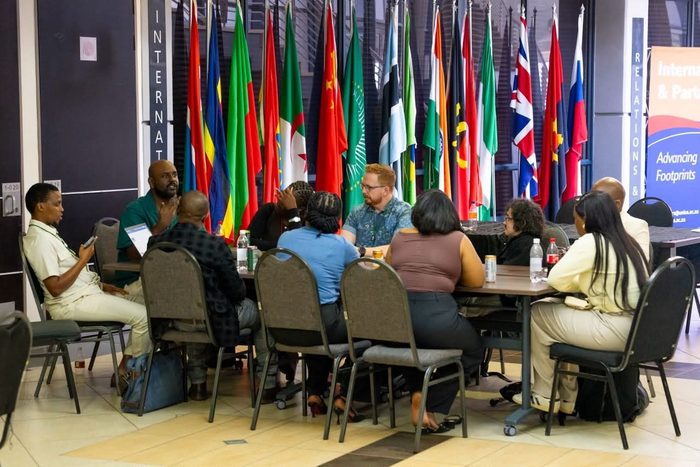
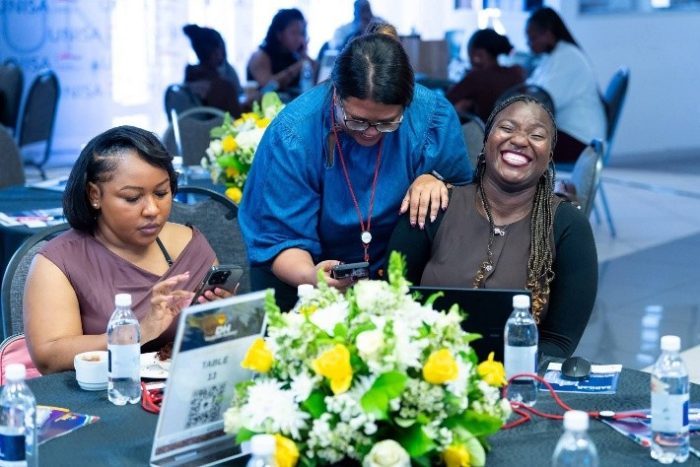
The Digital Humanities Cluster Summit was a one-of-a-kind event that brought together a wide range of people interested in Digital Humanities: researchers, university management, support staff, policy makers, etc. The aim of the summit was to share ideas of the meaning and impact of Digital Humanities in South Africa. This took place through various types of interactions from plenary keynote presentations and panels to smaller workshops focusing on specific aspects around Digital Humanities. This allowed for focused discussions, not only on Digital Humanities as a research field, but also related topics around education, decolonisation, indigenous knowledge, archives and preservation, media and community knowledge, among others. Ultimately the knowledge collected during the summit will form the basis of a white paper on Digital Humanities in South Africa.
The DH Summit was convened by the South African Centre for Digital Language Resources (SADiLaR), in collaboration with the University of South Africa (UNISA), Nelson Mandela University (NMU), and North-West University (NWU).
Contributing to a national policy conversation
The HSRC participated in the Digital Humanities (DH) Summit 2026 through Samantha Linn Coert, Stakeholder & Partnerships Officer in the Strategic Partnerships and External Capacity Development Unit. As a member of Working Group 9: Collaboration and Policy Engagement, she contributed to discussions informing the South African Digital Humanities Position Paper.
What was discussed?
Working Group 9 focused on how DH can develop as a sustainable, interdisciplinary field by building on existing higher-education and science, technology and innovation policy frameworks. Discussions covered recognition and design of qualifications, quality assurance and articulation between qualifications; postgraduate training and institutional capacity; digital infrastructure, repositories and preservation; sustainable funding; stakeholder coordination; and implementation accountability.
Contribution and relevance
Samantha brought a partnership and implementation perspective to the working group. Contributions included examining how DH could fit within existing qualification and quality-assurance frameworks, identifying decision-makers and policy engagement routes, and emphasising that recommendations should specify responsible actors, timelines, indicators and reporting mechanisms.
The discussions align with the HSRC’s work in evidence-informed policy engagement, strategic partnerships, digital transformation and research-capacity development. They also highlight opportunities to connect universities, government, funders, research infrastructure providers, libraries, museums, heritage organisations and specialist DH bodies around shared priorities.
Key message and next steps
A central message from Working Group 9 was that DH development should build on existing policy commitments rather than create a separate policy silo. Interdisciplinary flexibility must be balanced with clear learning outcomes, appropriate qualification levels, delivery capacity and quality assurance. Recommendations should be practical enough to translate into programmes, budgets, regulations or institutional commitments.