

The Gauteng Department of Human Settlements hosted the Second Annual Gauteng Department of Human Settlements Policy and Research Symposium under the theme: “Socially Cohesive Communities and Inclusive Housing for Sustainable and Equitable Development”. The symposium was held at Sky Hotel in Sandton from 9 to 10 July 2026. The Human Sciences Research Council (HSRC) was represented by colleagues from eResearch Knowledge Unit (eRKU) and Equitable Education and Economies (EEE) (Dr Tholang Mokhele, Dr Boitumelo Matlala, Ms Nohle Siboto and Mr Enathi Motolwana). These are also members of the Human Settlements Research Hub.
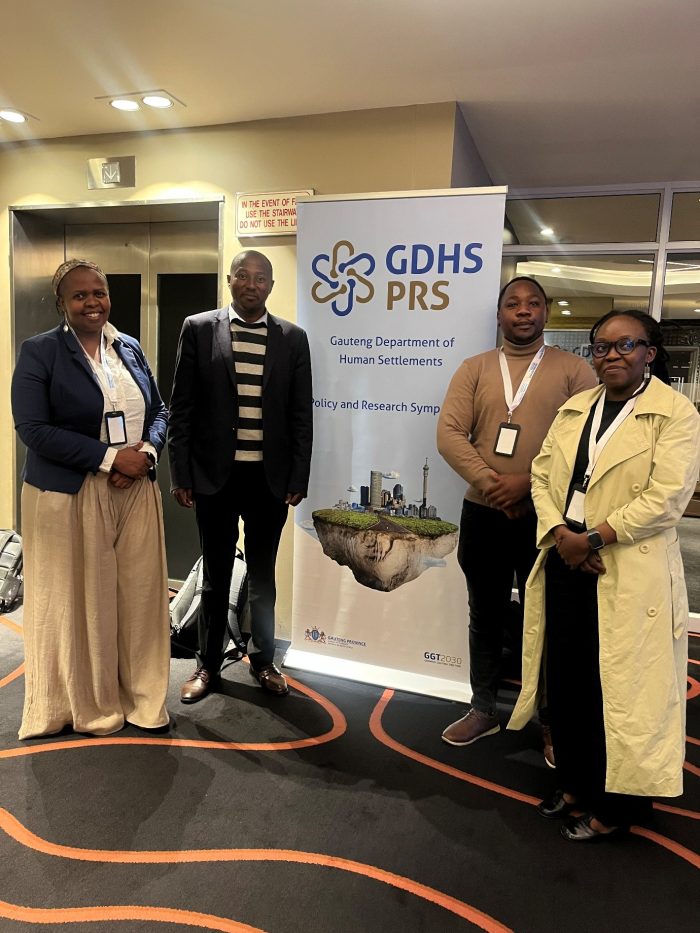
The aim of the symposium was to deepen dialogue on inclusive urban transformation, social cohesion, participatory governance, and sustainable human settlements within the Gauteng City Region (GCR). The symposium served as an important strategic platform to engage critically on the evolving realities of urbanisation, housing inclusion, spatial inequality, and climate resilience in South Africa.
The MEC for Human Settlements set the tone by emphasising that Gauteng continues to attract migrants seeking economic opportunities, resulting in rapid urbanisation and the expansion of informal settlements. Human settlements policy must therefore be grounded in credible evidence while remaining responsive to the lived realities of communities. The MEC further highlighted that, to create effective human-centred human settlements policies, there is the need for independent research and urged government to welcome constructive criticism. The MEC concluded that the future of human settlements depends on collaborative partnerships that combine the hard evidence brought by researchers with the valuable lived experiences of communities.
The symposium highlighted that informal settlements remain a central policy challenge requiring innovative and context-specific responses and the need for planning systems that accommodate informality rather than attempting to eliminate it. Participants further emphasised support for place-based and community-centred approaches to smart city development and improving alignment between strategic planning instruments such as Spatial Development Frameworks (SDFs) and Land Use Management Schemes. Advocacy was identified as a critical lever in accelerating the upgrading of informal settlements and the timely delivery of rudimentary services such as water and sanitation. Without sustained public and political advocacy, upgrading programmes risk stalling at the level of policy intent rather than reaching communities in need.
The symposium underscored a shift towards evidence-based, people-centred and collaborative human settlements planning. Participants consistently highlighted that the country’s human settlements challenges cannot be addressed through housing delivery alone, but require integrated solutions that combine research, community knowledge, inclusive planning, spatial transformation and cross-sector partnerships. A recurring message was that future human settlements policy must balance technical planning with the lived experiences of communities to create sustainable, inclusive and resilient settlements.
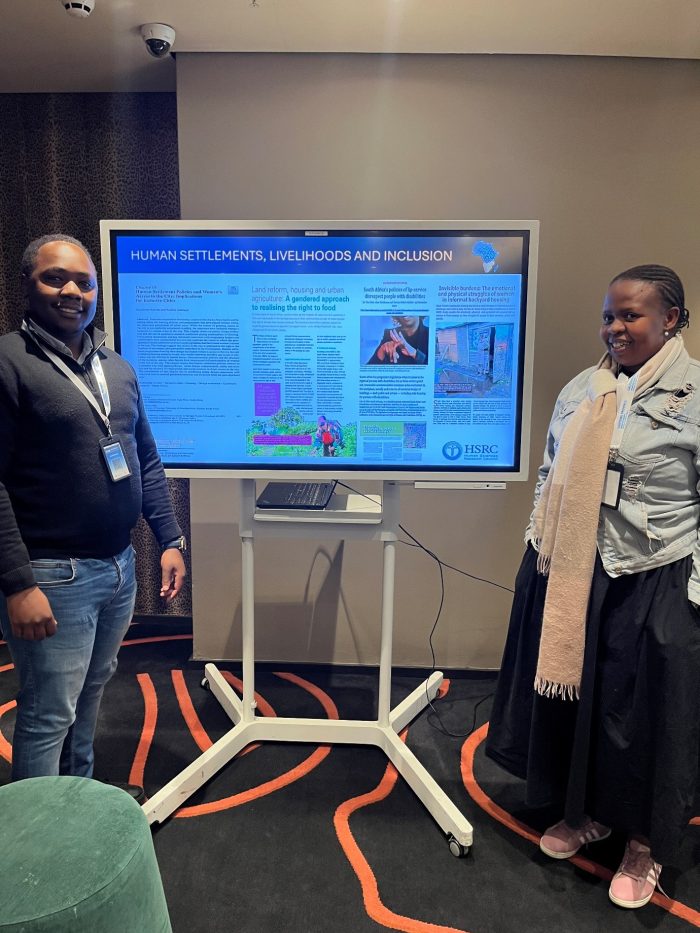
The HSRC team was able to engage with the Gauteng Department of Human Settlements team about reviving the renewal of the Memorandum of Understanding (MOU) between the two institutions. The HSRC was able to display research outputs on human settlements on the exhibition during the symposium.