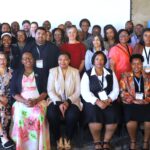



On the 22 – 23 April, the National Economic Development and Labour Council (Nedlac) convened a high-level dialogue session on Skills Development, Critical Skills Attraction, and the Just Energy Transition at Nedlac House in Johannesburg. As South Africa’s foremost institution for social dialogue to advance economic growth, inclusive participation in economic decision-making, and social equity, this event facilitated a comprehensive dialogue, seeking to engage social partners and relevant institutions to develop sustainable solutions that protect local employment opportunities while building workforce capacity for current and emerging economic needs.
The purpose of this session is to critically examine South Africa’s skills landscape in the context of the National Skills Development Plan (NSDP) 2030, the Human Resource Development Strategy for South Africa (HRDSSA), and related national plans. The dialogue sought to identify what is working and what is failing in current skills interventions and engaged on transformative solutions aligned to national strategic priorities. The session served as a tripartite-plus social dialogue platform to address two critical themes: skills development and critical skills attraction; and just transition and worker protection.

Dr. Angelique Wildschut represented the HSRC at this event, providing input as part of the first panel on Day 1, titled: ‘The skills-employment paradox – from data to system failure points,’ facilitated by Nedlac Head, Ms. Nobuntu Sibisi. Dr. Wildschut’s presentation provided insights from the first iteration of the Labour Market Intelligence Project (LMIP), while drawing on current projects and emerging evidence within the broader South African skills ecosystem, such as the Human Resource Development Observatory and an AI-enabled career guidance tool. The focus of the input was towards strengthening labour market intelligence, while enhancing the use of skills data, and supporting more responsive, evidence-based skills planning.

South Africa stands at a crossroads where research-driven skills development is critical for its youth, particularly those not in employment, education, or training (NEET). Fragmented data and limited integrated analysis have long constrained effective policy responses. HSRC projects such as the HRD Observatory are addressing this by centralizing labour market intelligence and making it widely accessible. For young people, this creates tailored pathways into employment through learnerships, short innovation programmes, and work-integrated learning. These approaches can significantly improve job absorption rates. This is evident in the shift towards skills-first hiring which is opening opportunities for those with practical abilities, even without formal degrees. In this evolving landscape, continuous reskilling and upskilling are fundamental to inclusive growth, workforce sustainability, and long-term job security.
The panel included inputs from the Statistician-General of South Africa, Mr. Risenga Maluleke and the Director of Development Policy Research Unit at the University of Cape Town. While the former provided an overview of labour market trends with a specific focus on the disconnect between education outputs and employment absorption, including youth unemployment, Not Educated, Employed or Training (NEET) trends, and sectoral disparities, the latter provided international comparative insights on aligning skills systems with employment outcomes as well as national economic growth trends that provide parameters for skilling and employment in the medium term.
It is expected that the understanding and agreed principles emerging from the dialogue will feed into:
1. coordinated skills development consistent with the NDP 2030’s vision of an educated, skilled and capable workforce, while initiating stakeholder collaboration mechanisms that give effect to the tripartite-plus social dialogue model at the heart of South Africa’s skills governance architecture.
2. policy recommendations to strengthen and amend the Skills Development Act, inform updates to the NSDP 2030 implementation and the Master Skills Plan 2024–2030, and guide immigration legislation amendments aligned to critical skills objectives.
3. further enhancing coordination between Higher Education, Labour, and Immigration sectors, a core requirement of the NSDP 2030’s integration imperative and improve funding frameworks for the NSF and the SETA levy-grant system.
Supporting the development of just transition regulations with SETA-aligned training programmes, informed by the Just Energy Transition Investment Plan and the Presidential Climate Commission, and secure employer-supported worker transition packages consistent with the HRDSSA goals.
This dialogue coincides with the 2026 State of the Nation Address mandate, which prioritises the education and training value chain as a driver of industrial growth and social inclusion. The current administration’s call for reform requires social partners to move beyond rhetoric toward a radical rethinking of human capital development – one that delivers on the original promise of the 1998 Act, responds to the labour market disruptions of the Just Transition and rapid Artificial Intelligence adoption, and translates policy commitment into implementable, high-impact solutions.
Click here for more detail on the event and for the presentation.